praecipitatio
pra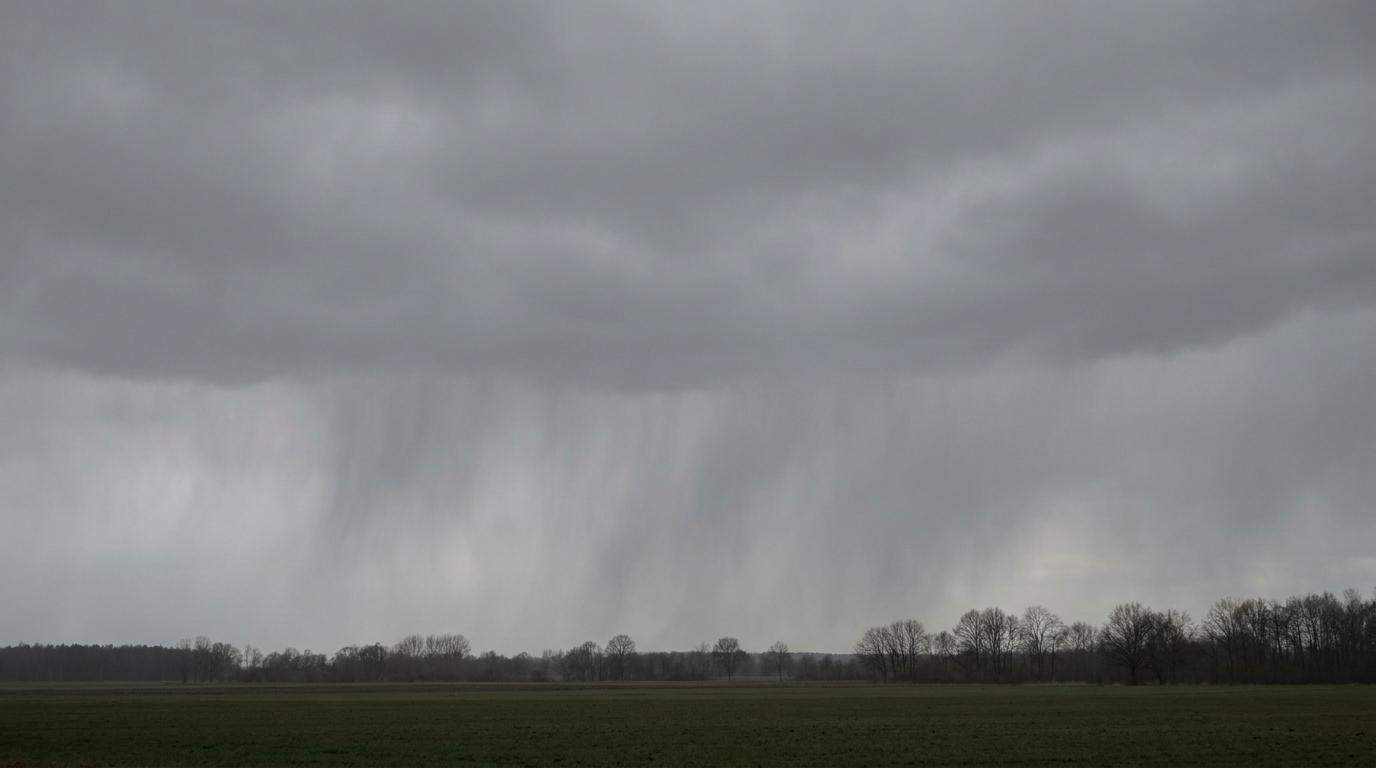
Altostratus praecipitatio
© wetterkurs.ch
Description
The name "praecipitatio" (Latin: the falling down, precipitation) does not designate an independent cloud genus, but rather an accessory feature: visible precipitation falling from a cloud that actually reaches the ground. This distinguishes praecipitatio from virga, in which precipitation evaporates before reaching the surface. The feature can occur with various cloud genera, most commonly with nimbostratus, cumulonimbus, cumulus, stratus, stratocumulus, and altostratus. Precipitation may take the form of rain, snow, ice pellets, graupel, or hail.
Identification Features
- Visible streaks or veils of precipitation beneath the cloud base
- Precipitation reaches the ground (in contrast to virga)
- Streaks often appear greyish, milky, or dark
- In rain, typically diffuse, vertical or slightly slanted veils
- In snow, flakes fall more slowly and irregularly
- Frequently associated with nimbostratus or cumulonimbus
- With shower clouds, often localised, compact columns of precipitation
Related genera
praecipitatio is not a distinct cloud type, but a supplementary feature that is given in addition to the genus name. It can occur with the following genera: As, Ns, St, Sc, Cu, Cb.
Meteorological Significance
Praecipitatio is the clearest indicator of active precipitation and is therefore of high practical importance. Depending on the parent cloud, it may take the form of stratiform continuous precipitation (nimbostratus, altostratus) or convective showers and thunderstorms (cumulonimbus, cumulus congestus). The intensity, type, and duration of precipitation provide clues about the weather character and potential hazards such as flooding, black ice, or hail. For hikers, pilots, and farmers, recognising praecipitatio is crucial, as it indicates a weather deterioration that has already set in.
Facts
- WMO-Code
- pra
- Height layer
- Mid-level clouds
- Genus
- NIMBOSTRATUS