asperitas
asp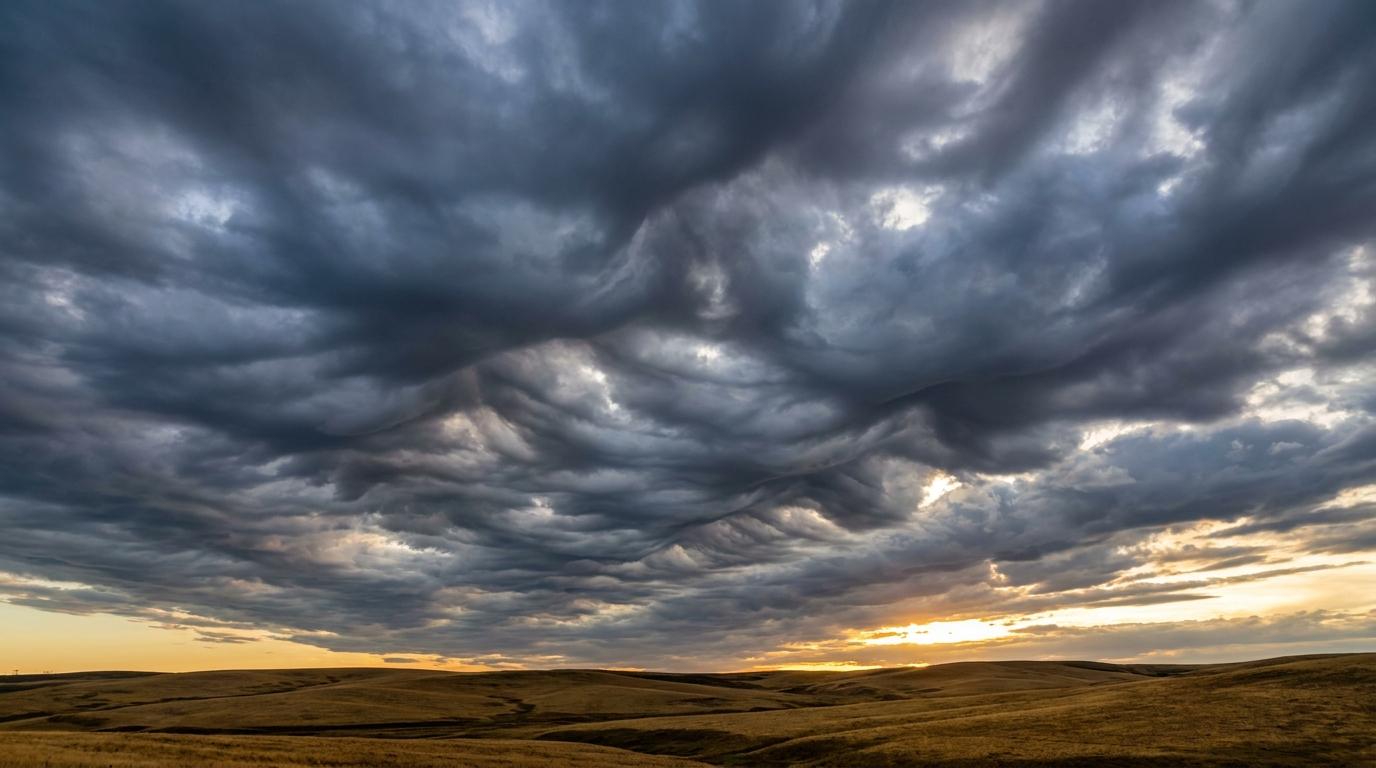
Altocumulus asperitas
© wetterkurs.ch
Description
The name "asperitas" (Latin: roughness, unevenness) describes the wave-like, rugged underside of this rare cloud formation, which is reminiscent of a turbulent ocean surface viewed from below. Asperitas was officially added to the International Cloud Atlas by the WMO in 2017 as a new supplementary feature, making it the first new addition since 1951. The formation most commonly occurs in association with stratocumulus or altocumulus and is characterized by pronounced, locally confined wave structures. Despite its dramatic appearance, asperitas typically dissipates without producing precipitation.
Identification Features
- Wave-like, chaotic-looking underside of the cloud layer
- Resembles a rough ocean surface viewed from below
- Pronounced light-and-dark contrasts created by the undulating structures
- Most commonly occurs in association with stratocumulus or altocumulus
- Often observed during or after thunderstorm activity
- Movement of the waves often clearly visible
- Despite dramatic appearance, usually no precipitation
- Locally confined and relatively short-lived
Related genera
asperitas is not a distinct cloud type, but a supplementary feature that is given in addition to the genus name. It can occur with the following genera: Ac, Sc.
Meteorological Significance
Asperitas typically forms as a result of strong wind shear in the atmosphere, often in connection with convective activity or following the passage of thunderstorms. The wave-like structures indicate turbulent air currents and instabilities in different atmospheric layers. Although the formation appears threatening, it is not meteorologically a direct precursor to severe weather, but rather a consequence of atmospheric processes that have already taken place. Observing asperitas is rare and a special event for weather enthusiasts. A reliable weather forecast cannot be derived from this formation alone.
Facts
- WMO-Code
- asp
- Height layer
- Low clouds
- Typical height
- 0.6 - 2.0 km
- Genus
- STRATOCUMULUS