virga
vir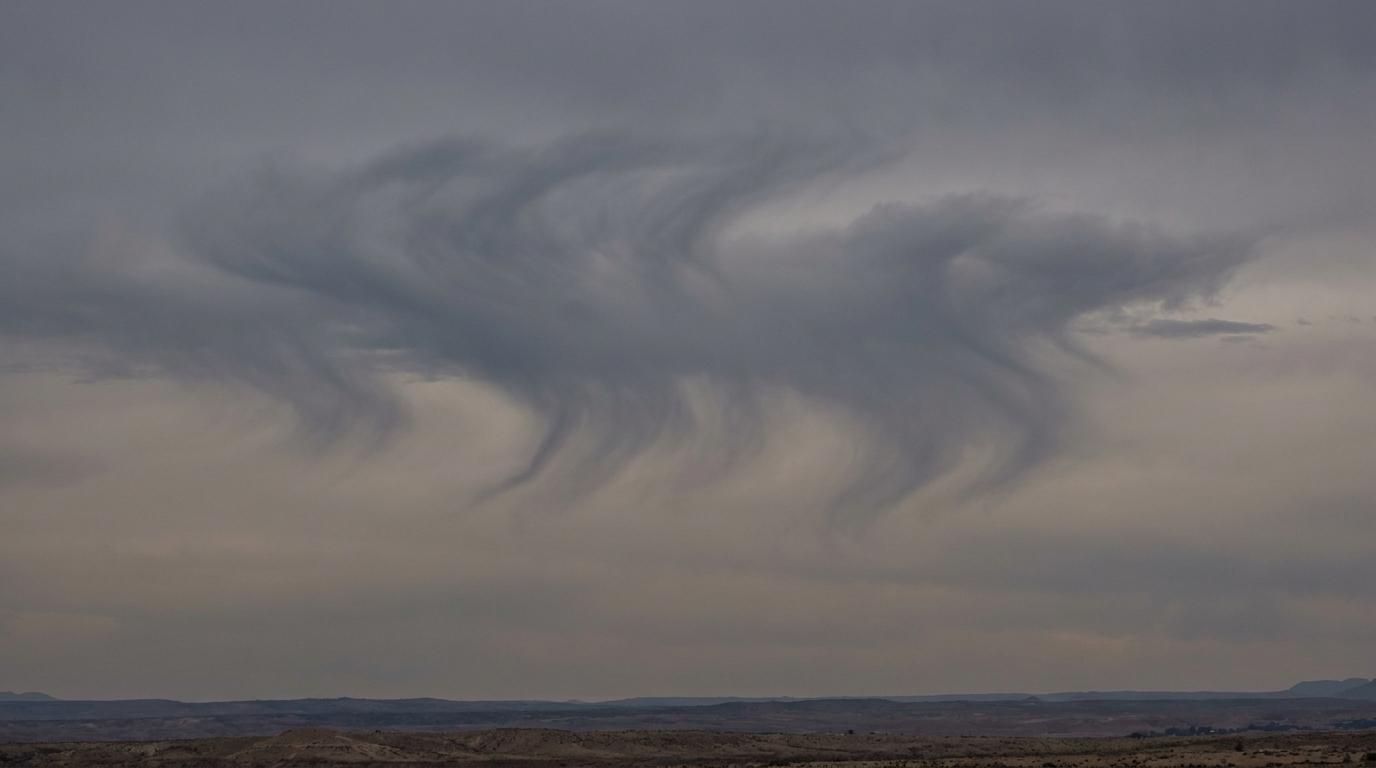
Altostratus virga
© wetterkurs.ch
Description
The name "virga" (Latin: rod, branch) describes streak-like precipitation trails that hang beneath a cloud but do not reach the ground. It is not an independent cloud genus, but rather an accessory feature that can occur with various cloud genera, particularly Altocumulus, Cirrocumulus, Altostratus, Nimbostratus, Stratocumulus, Cumulus, and Cumulonimbus. The precipitation particles (raindrops or ice crystals) evaporate or sublimate on their way downward through dry air before reaching the ground. Virga appears as fine, often curved or slanted veils or streaks below the cloud base.
Identification Features
- Streak- or veil-like precipitation trails beneath a cloud
- Precipitation does not reach the ground
- Often slanted or curved due to wind shear
- Appears as soft, greyish or whitish fringes
- Frequently observed with Altocumulus and Cirrocumulus
- Can glow reddish or orange in low-angle sunlight
- A dry air layer between cloud base and ground is a prerequisite
Related genera
virga is not a distinct cloud type, but a supplementary feature that is given in addition to the genus name. It can occur with the following genera: Cc, Ac, As, Ns, Sc, Cu, Cb.
Meteorological Significance
Virga indicates that the air layer below the cloud is significantly drier than at cloud level. The evaporation of precipitation cools the air and can lead to downbursts, especially with Cumulonimbus virga in hot, dry environments. Virga is very commonly observed in mountainous regions and arid areas. It can be an indicator of an approaching change in weather when the atmosphere gradually becomes more humid and precipitation later reaches the ground. For aviation, virga phenomena are relevant due to possible turbulence and sudden wind shear.
Facts
- WMO-Code
- vir
- Height layer
- Mid-level clouds
- Typical height
- 2.0 - 7.0 km
- Genus
- ALTOCUMULUS