Stratocumulus opacus
Sc op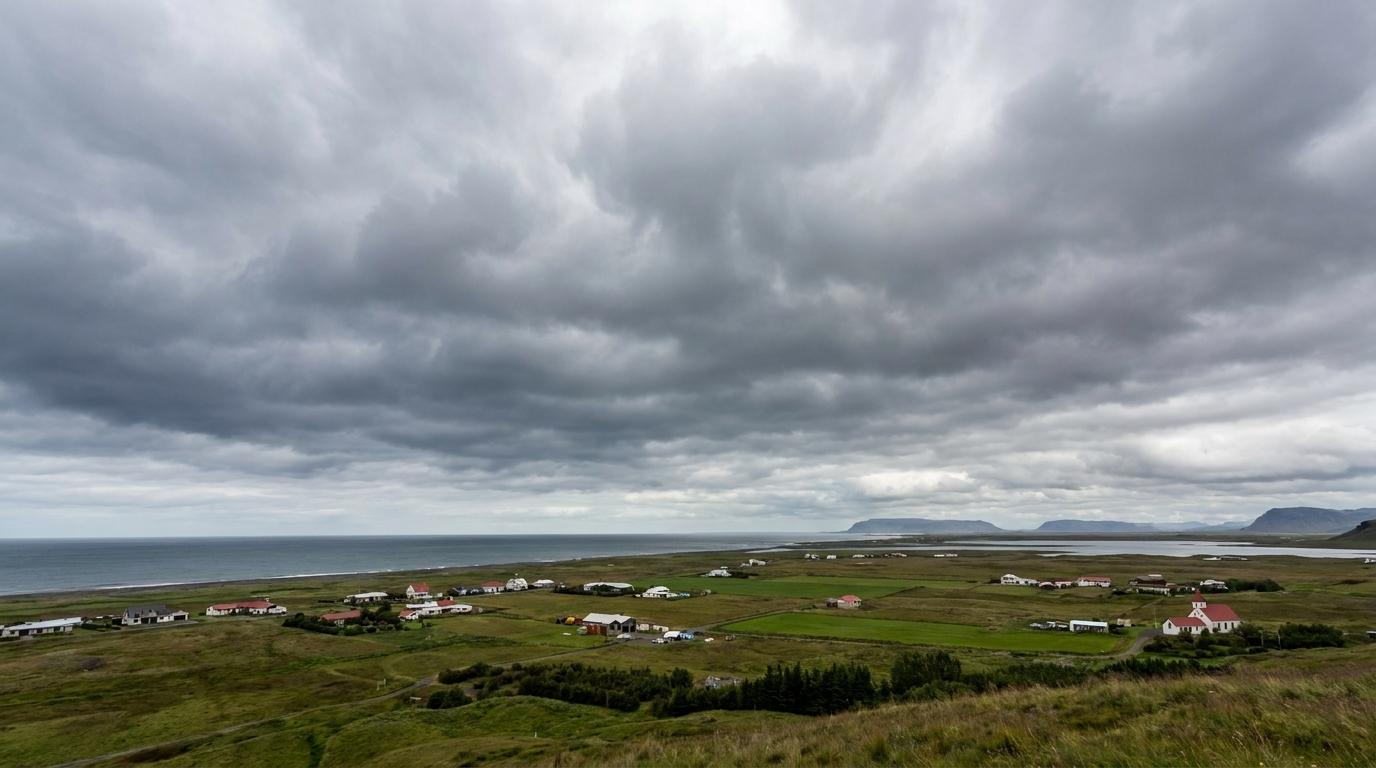
Stratocumulus opacus
© wetterkurs.ch
Description
The variety «opacus» (lat. opaque, shady) refers to an extensive Stratocumulus layer so thick that the sun or moon is completely obscured. Stratocumulus opacus appears as a grey, often undulating or rolled cloud cover consisting of connected clumps, patches, or rolls. Despite its dense appearance, lighter and darker areas are usually still visible within the cloud structure, which distinguishes it from the uniform Stratus layer. It occurs most frequently in autumn and winter, as well as during high-pressure situations with an inversion weather pattern.
Identification Features
- Closed, grey cloud cover consisting of clearly recognisable clumps or rolls
- Sun and moon are completely obscured, with no position discernible
- Underside shows distinct structure with lighter and darker areas
- Low cloud base, typically between 600 and 2,000 metres
- In contrast to Stratus, clearly structured appearance rather than a diffuse fog layer
- Often large-scale coverage extending over wide areas of land
- Sometimes associated with light drizzle or weak snowfall
Occurrence by genus
Highlighted: all genera with which opacus occurs.
Meteorological Significance
Stratocumulus opacus is typical of stable air stratification with a pronounced inversion at mid-levels, which suppresses any vertical convection. In winter, this cloud type can persist for days or weeks as a so-called high fog layer, particularly over the Swiss Plateau under the influence of high pressure. Precipitation is rare and mostly limited to light drizzle or snow grains. The dense cloud cover significantly dampens daytime temperatures and prevents nocturnal cooling. Dissipation often only occurs with increasing winds, föhn influence, or a change in weather associated with a frontal passage.
Facts
- WMO-Code
- Sc op
- Height layer
- Low clouds
- Typical height
- 0.6 - 2.0 km
- Genus
- STRATOCUMULUS