Stratus opacus
St op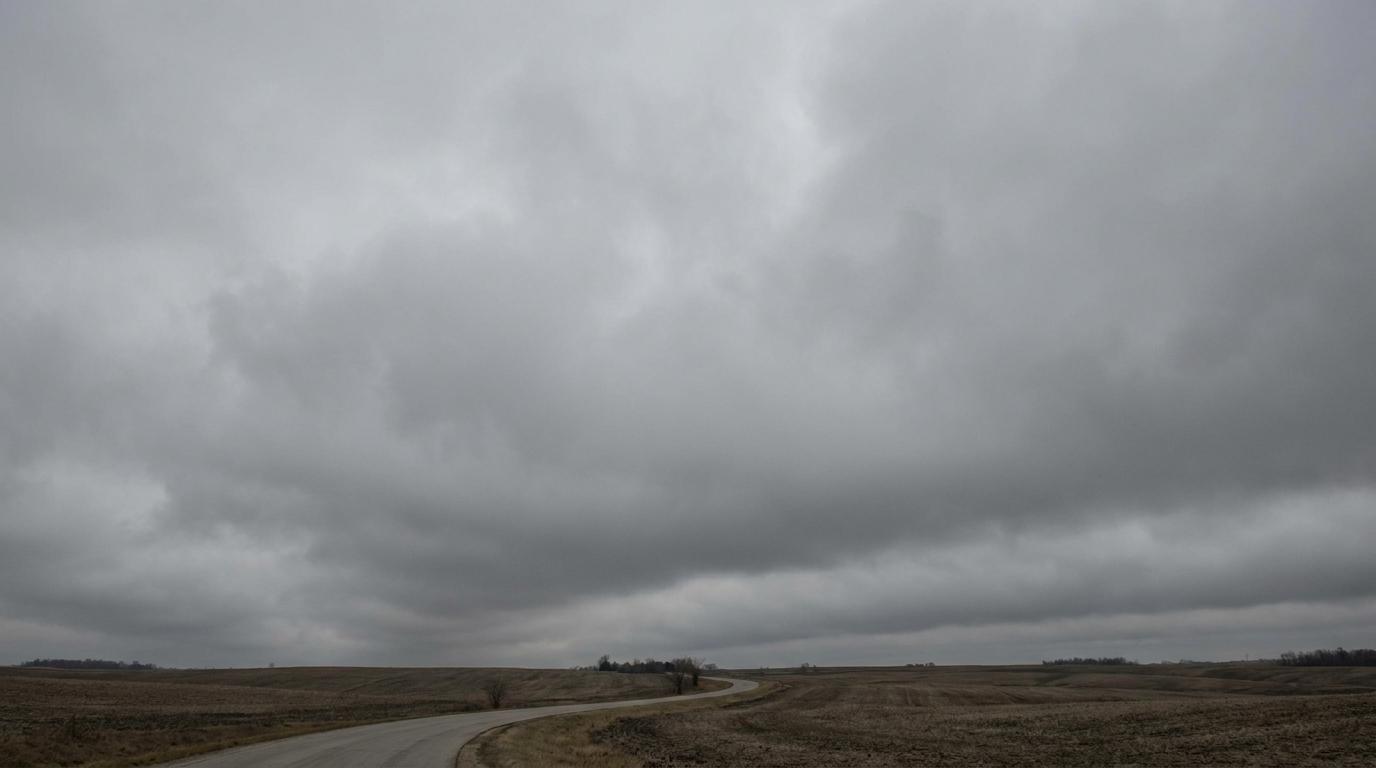
Stratus opacus
© wetterkurs.ch
Description
The variety «opacus» (lat. opaque, dark) describes a stratus cloud so dense that the position of the sun or moon can no longer be discerned through the cloud cover. Stratus opacus forms a closed, grey cloud layer at low altitude that completely obscures the sky. This cloud type produces overcast, often dreary weather with diffuse lighting and can persist monotonously for hours or days. It occurs particularly frequently during the winter months over the Swiss Plateau, when high fog takes hold of the region.
Identification Features
- Closed, uniformly grey cloud cover at low altitude
- Sun or moon not visible through the cloud
- No discernible structure or contours
- Diffuse, shadow-free lighting at ground level
- Base typically below 1,000 metres
- Often associated with high fog or ground fog over the Swiss Plateau
- Can occasionally produce drizzle or snow grains
Occurrence by genus
Highlighted: all genera with which opacus occurs.
Meteorological Significance
Stratus opacus indicates a stable atmospheric stratification with a pronounced inversion, beneath which moist air is trapped. This cloud type generally brings overcast, precipitation-poor weather, occasionally accompanied by drizzle or, in winter, by snow grains. Over the Swiss Plateau, it is typical of winter high-fog situations, while the Alps often enjoy bright sunshine above. Dissipation only occurs when pressure patterns change or when strong winds break up the inversion layer.
Facts
- WMO-Code
- St op
- Height layer
- Low clouds
- Genus
- STRATUS