Stratus translucidus
St tr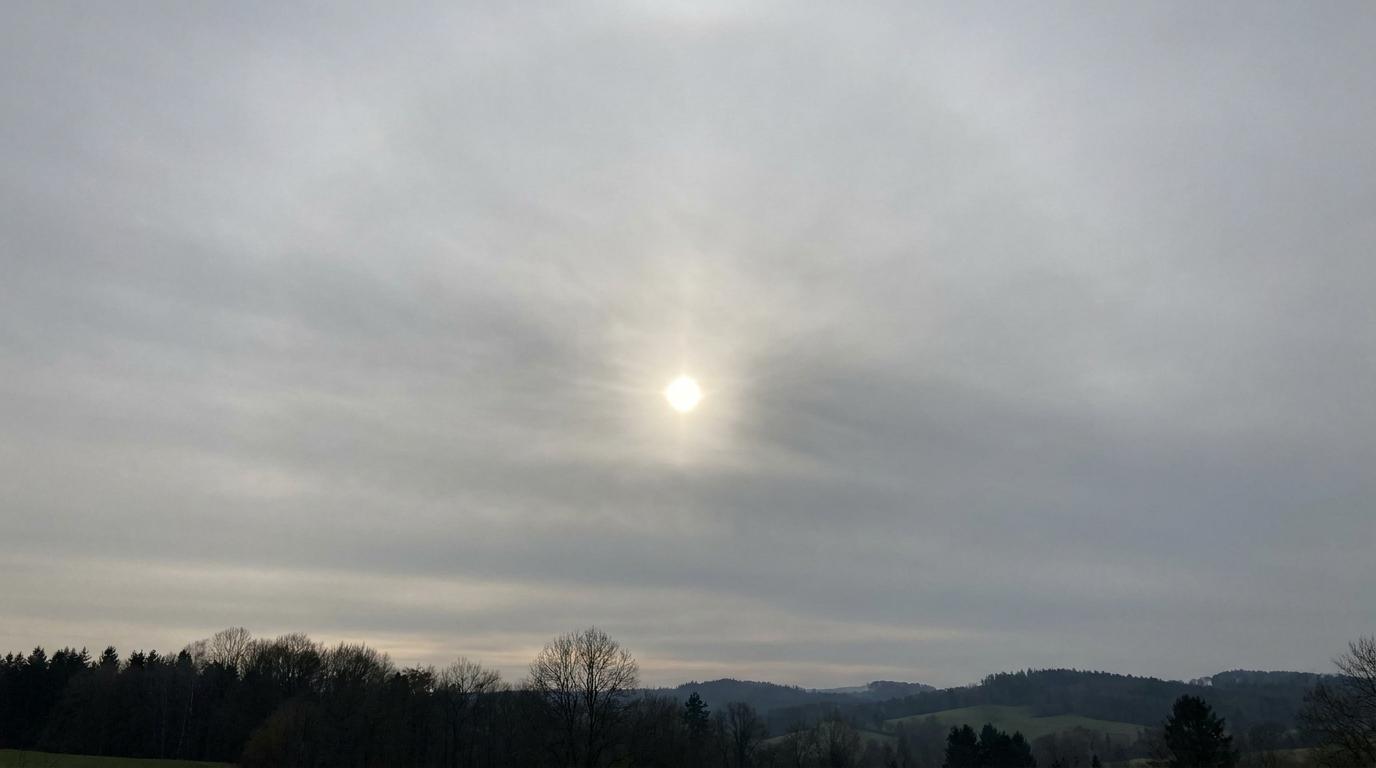
Stratus translucidus
© wetterkurs.ch
Description
The name "translucidus" (Latin: translucent) describes a variety of stratus in which the cloud layer is thin enough to reveal the position of the sun or moon. Stratus translucidus forms a uniform, veil-like layer at low altitudes that covers the sky but does not completely darken it. The outlines of the sun or moon shimmer through the cloud cover as a bright, diffuse disc. This variety occurs frequently during stable weather conditions, when moist air near the surface leads to a thin, uniform condensation layer. Compared to stratus opacus, the layer is noticeably less dense and appears more like a fine, milky veil across the sky.
Identification Features
- Uniform, flat cloud layer at low altitude with no distinctive structures
- The sun or moon are visible through the layer as a bright, diffuse disc
- The cloud base appears consistent and featureless
- Brightness at ground level is only slightly reduced; shadows may still be faintly visible
- No precipitation, or at most light drizzle
- Layer often appears greyish-white to milky
- Distinguished from stratus opacus by its translucency to light
- Can form from fog that is slightly lifted
Occurrence by genus
Highlighted: all genera with which translucidus occurs.
Meteorological Significance
Stratus translucidus indicates a stable atmosphere with slight moisture in the lower layers. It generally brings no significant precipitation, at most occasional light drizzle. It frequently occurs in the morning hours or during weak inversions, and often dissipates during the course of the day as temperatures rise. If the layer persists, it can thicken into stratus opacus with increasing moisture, indicating a deterioration in visibility. In combination with approaching warm front cloudiness, it can be a precursor to approaching precipitation.
Facts
- WMO-Code
- St tr
- Height layer
- Low clouds
- Genus
- STRATUS