Stratocumulus
Sc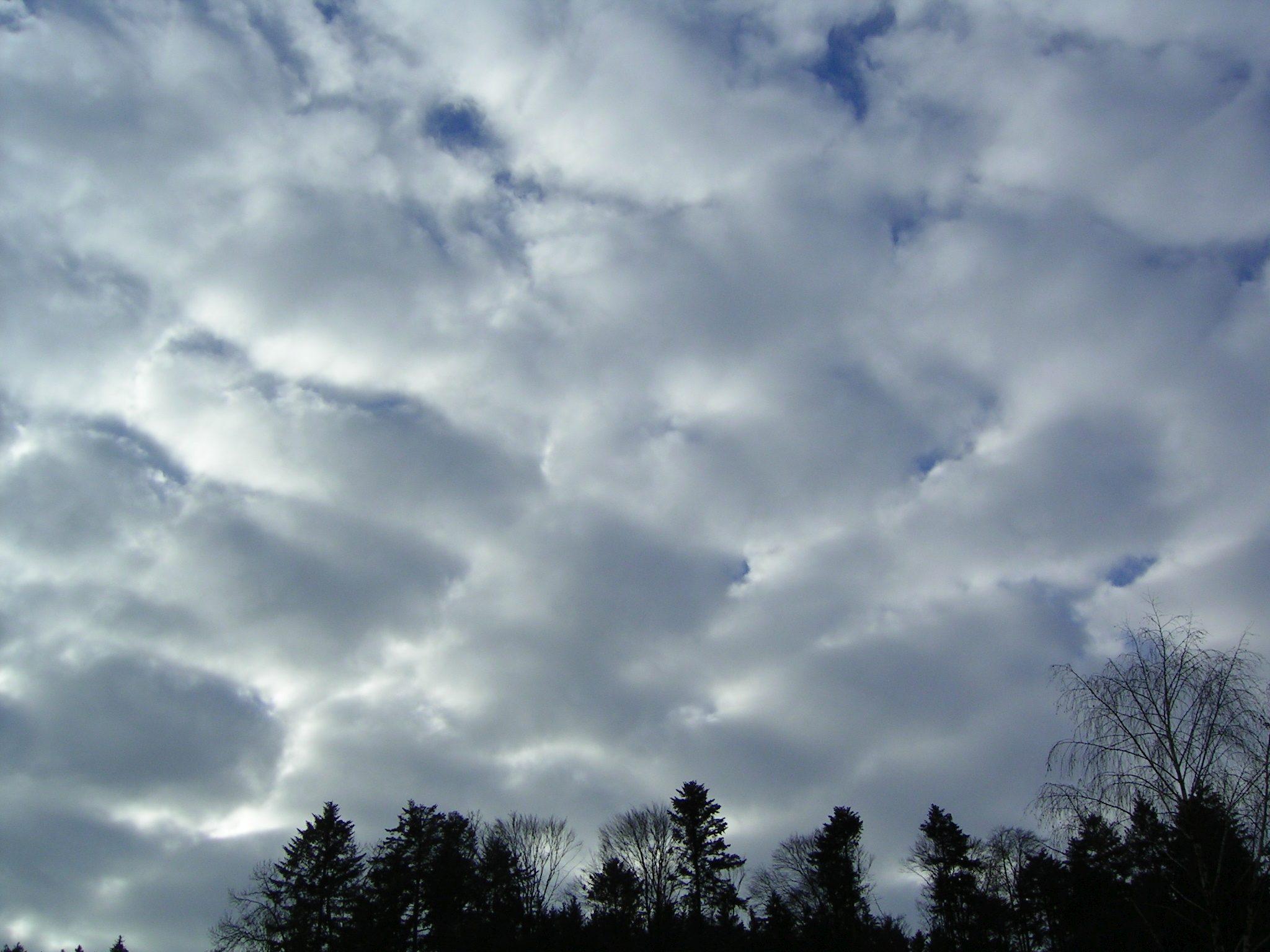
Stratocumulus
© academia.ru
Description
Stratocumulus (lat. stratus = spread out, cumulus = heap) is one of the most common cloud forms worldwide, covering approximately 20 percent of the Earth's surface at any given time. It is a low-level layer cloud composed of rounded, roll-shaped, or plate-like elements arranged in groups, rows, or waves. The individual cloud elements are gray to whitish and often show darker patches. Stratocumulus frequently forms through the spreading of cumulus clouds beneath an inversion layer, or through wave-like lifting processes in moist air masses. This cloud genus preferentially occurs in stable, slightly moist air masses and is especially widespread in maritime climate zones and during the colder season over continental areas.
Identification Features
- Large, rounded, or roll-shaped cloud elements in a continuous layer
- Gray to whitish coloration with clearly distinguishable darker areas
- Cloud base is low, typically between 600 and 2000 meters
- Individual cloud elements have an apparent diameter of more than 5 degrees (distinguishing feature from altocumulus)
- Often a wave-like or roll-like structure is visible
- Blue sky may show through between elements, but does not have to
- Does not produce sustained or heavy precipitation
- Frequently forms from dissipating or spreading cumulus clouds
Species of this genus
Highlighted: all species that occur with Stratocumulus.
Meteorological Significance
Stratocumulus is generally associated with stable weather conditions and rarely brings significant precipitation — at most light drizzle or snow grains. Its presence indicates a pronounced temperature inversion in the lower troposphere that limits vertical convection. If stratocumulus cloud cover dissipates during the course of the day, this can indicate increasing atmospheric instability and the possible development of cumulus clouds. In coastal areas and over cool ocean currents, stratocumulus can persist for days or weeks, and due to its high albedo, it exerts a significant cooling effect on the climate system. Widespread stratocumulus over continental areas in winter often indicates prolonged high-pressure situations with overcast but precipitation-free weather.
Facts
- WMO-Code
- Sc
- Height layer
- Low clouds
- Typical height
- 0.6 - 2.0 km
- Genus
- STRATOCUMULUS