Stratus
St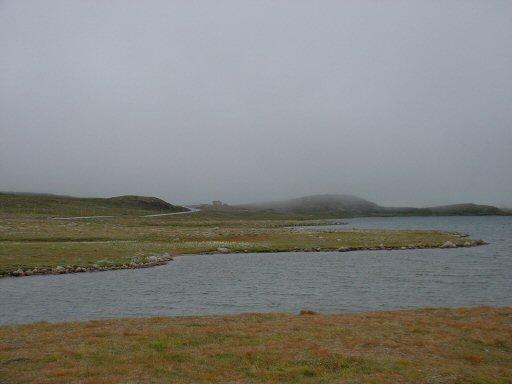
Stratus Wolken
© Wikicommons
Description
The name Stratus derives from the Latin word "stratus" (spread out, stretched) and aptly describes the appearance of this cloud genus. Stratus forms a uniform, grey cloud layer that often completely covers the sky, giving the landscape a dull, diffuse appearance. These clouds frequently form through large-scale, slow ascent of moist air or through the cooling of air layers near the ground, for example by nocturnal radiation or the flow of air over cold surfaces. The cloud base is often very low and can touch the ground as fog in hilly or mountainous terrain. Stratus is one of the most common cloud forms in the temperate latitudes, particularly during the cooler seasons and in coastal regions.
Identification Features
- Uniform, featureless, grey cloud layer without distinct contours
- Frequently covers the sky completely like a consistent veil
- Very low cloud base, often only a few hundred metres above the ground
- The sun or moon is visible at most as a faintly glowing disc
- Can produce light drizzle or fine snowfall, but no heavy precipitation
- Differs from fog in that the cloud base does not lie directly at the ground
- No halo effect as with Cirrostratus, since the cloud consists of small water droplets
- Appears more uniform compared to Stratocumulus and shows no visible wave structure or separation into individual elements
Species of this genus
Highlighted: all species that occur with Stratus.
Meteorological Significance
Stratus indicates stable atmospheric conditions with little vertical mixing. It frequently brings overcast, dull weather with reduced visibility and may be accompanied by light drizzle or fine rain, while significant precipitation remains absent. During the winter months, Stratus can persist as a so-called high fog layer for days at a time, particularly in basin and valley locations where an inversion layer prevents the clouds from dissipating. If the Stratus breaks up during the day due to solar radiation, this is an indication of increasing warming and destabilisation of the lower atmosphere. A thickening of the Stratus layer or a transition to Nimbostratus, on the other hand, may point to approaching fronts and imminent, prolonged precipitation.
| Genera: | Altocumulus AcAltostratus AsCirrocumulus CcCirrostratus CsCirrus CiCumulonimbus CbCumulus CuNimbostratus NsStratocumulus ScStratus St |
| Subtypes: | fractus St franebulosus St neb |
Facts
- WMO-Code
- St
- Height layer
- Low clouds
- Genus
- STRATUS