Stratus nebulosus
St neb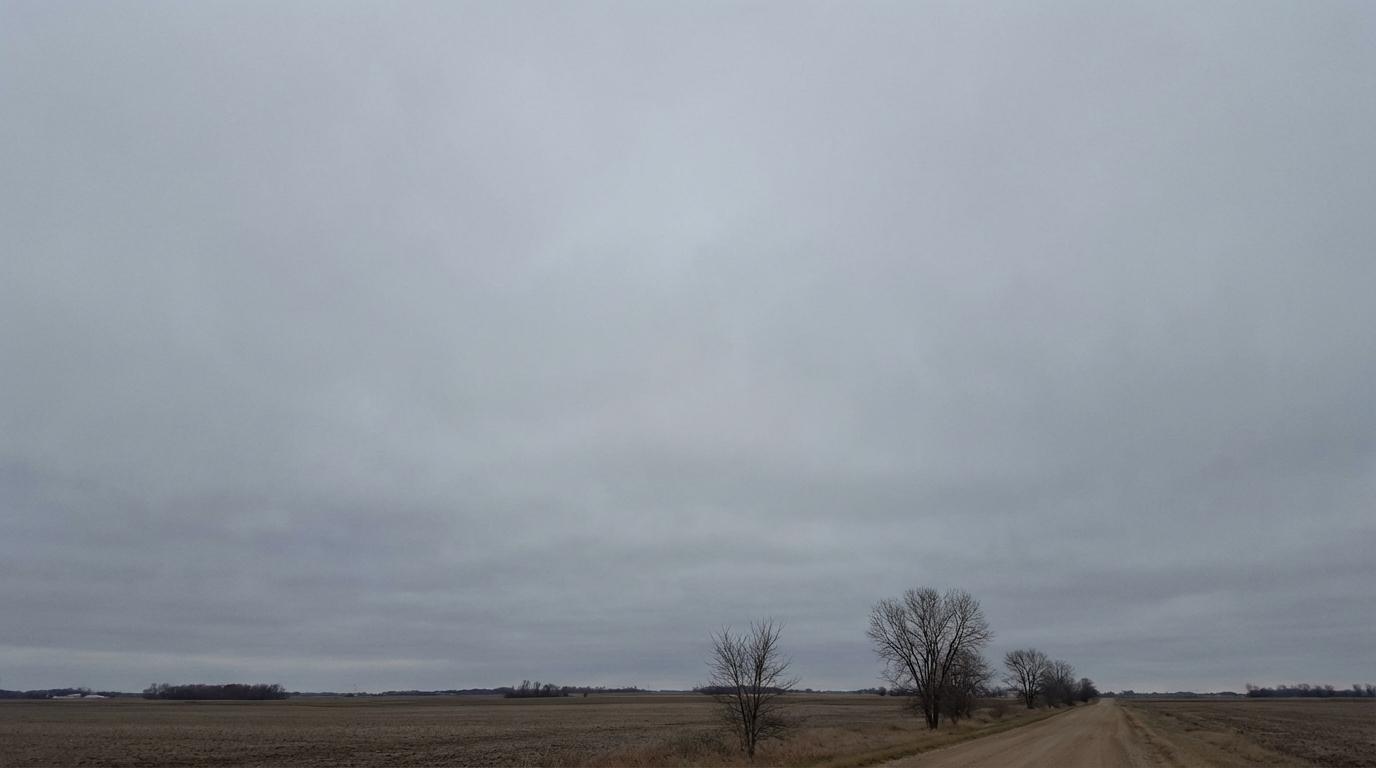
Stratus nebulosus
© Wetterkurs.ch
Description
The name "nebulosus" (Latin: foggy, veiled) describes the uniformly dull, featureless appearance of this cloud. Stratus nebulosus forms a continuous, structureless, and often grey cloud layer that can completely cover the sky. In low-lying areas it closely resembles fog and frequently develops through the lifting of fog layers or through large-scale cooling of moist air masses. The cloud shows no discernible details, waves, or structures whatsoever, and appears as a uniform, diffuse veil. When the cloud base is very low, Stratus nebulosus can significantly obscure the landscape and greatly reduce visibility.
Identification Features
- Uniform, structureless, and featureless cloud layer with no discernible details
- Grey to grey-white, diffuse veil across the sky
- Frequently covers the sky completely without any gaps
- No waves, billows, or other structural elements visible
- Very low base, often only a few hundred metres above the ground
- Can be difficult to distinguish from high fog or lifted fog
- The sun appears at most as a faintly luminous disc
- Can produce light drizzle or fine rain
Occurrence by genus
Highlighted: all genera with which nebulosus occurs.
Meteorological Significance
Stratus nebulosus indicates stable atmospheric layering and high humidity in near-surface layers. It frequently develops in high-pressure situations during the winter half of the year, during the advection of warm air over a cold surface, or through the lifting of fog patches. Light drizzle or fine rain can fall from this cloud layer, though more substantial precipitation is not to be expected. Its occurrence points to a persistently dull and humid weather situation that can often persist for hours or even days. Dissipation typically occurs through warming, stronger winds, or a change in the large-scale weather pattern.
| Genera: | Altocumulus AcAltostratus AsCirrocumulus CcCirrostratus CsCirrus CiCumulonimbus CbCumulus CuNimbostratus NsStratocumulus ScStratus St |
| Species: | fractus St franebulosus St neb |
Facts
- WMO-Code
- St neb
- Height layer
- Low clouds
- Genus
- STRATUS